



You spent $3,000 on Google Ads last month. When a patient asked ChatGPT "best physical therapist near me," it didn't see a single dollar of it.
Here's what it saw: your treatment philosophy page (if you have one), your patient testimonials (if you've collected them), your therapist bios (if they're more than credentials), and your outcome stories (if you've shared them).
41% of people now trust AI recommendations more than paid search ads. The marketing game just changed—and most PT clinics are still playing the old one.
The Old Game is Ending

The Google Ads playbook worked for 20 years. Pay more, rank higher, win patients. Simple math.
AI doesn't work that way.
When patients ask ChatGPT, Perplexity, or Google's AI Overviews for healthcare recommendations, they get answers synthesized from content—not ads. The AI reads your website, your reviews, your treatment pages. It doesn't care about your cost-per-click strategy or your retargeting campaigns.
The shift is already happening:
• 4,700% growth in AI-assisted searches in the last 12 months
• 800 million people now use ChatGPT weekly
• 41% of people trust AI recommendations over paid ads
• Gartner predicts 25% drop in traditional search volume by 2026
Local service businesses are already seeing 15-20% of their web traffic come from AI referrals. PT clinics are next—patients are already asking AI: *"Who's the best physical therapist near me for shoulder pain?"*
When a patient asks that question, your $3,000 monthly ad budget is invisible. Your content is everything.
The New Game: Story Beats Spend

So if ads don't work the same way, what does?
Story.
AI reads your website like a research assistant reads a report. It pulls from your treatment philosophy, your patient testimonials, your therapist expertise, your FAQ content, your outcome data.
It's looking for narrative—a clear, comprehensive answer to the patient's question.
Here's the difference:
Generic content: "We provide excellent physical therapy care for all patients."
AI-readable content: "Our approach to rotator cuff rehabilitation combines manual therapy with progressive strengthening. Most patients see significant improvement within 6-8 weeks. We track outcomes using the QuickDASH assessment."
The first tells AI nothing. The second tells AI exactly who you help, how you help them, and what results you get.
And here's the kicker: 41% of patients now trust AI recommendations MORE than paid search ads.
That's not a trend. That's a fundamental shift in how patients find their PT.
How AI "Recommends" a PT Clinic
Let's make this concrete.
A patient opens ChatGPT and types:
"Find me a physical therapist in Austin who specializes in shoulder injuries and uses manual therapy"
Here's what AI looks for on your website:
What AI scans:
• Does your website mention "shoulder injuries" in a detailed way?
• Is there content explaining your manual therapy approach?
• Are there patient testimonials mentioning shoulder recovery?
• Do your therapist bios include specialties and certifications?
• Is your information consistent across Google, Bing, and Yelp?
What AI ignores:
• Your ad spend
• Your position in paid search results
• How much you paid for your domain
• How many keywords you stuffed into your meta tags
• Your retargeting pixel strategy
The game has changed from who pays the most to who tells the best story.
Old Game (SEO/PPC) → New Game (GEO):
1. Keyword density → Conversational answers
2. Ad budget size → Content depth
3. Click-through rate → Story clarity
4. Position #1 on Google → "Recommended by AI"
5. Outspend competitors → Out-story competitors
GEO—Generative Engine Optimization—is the new discipline. It's not about tricking algorithms with keywords. It's about giving AI clear, comprehensive, trustworthy content to cite.
The Urgency: 4,700%
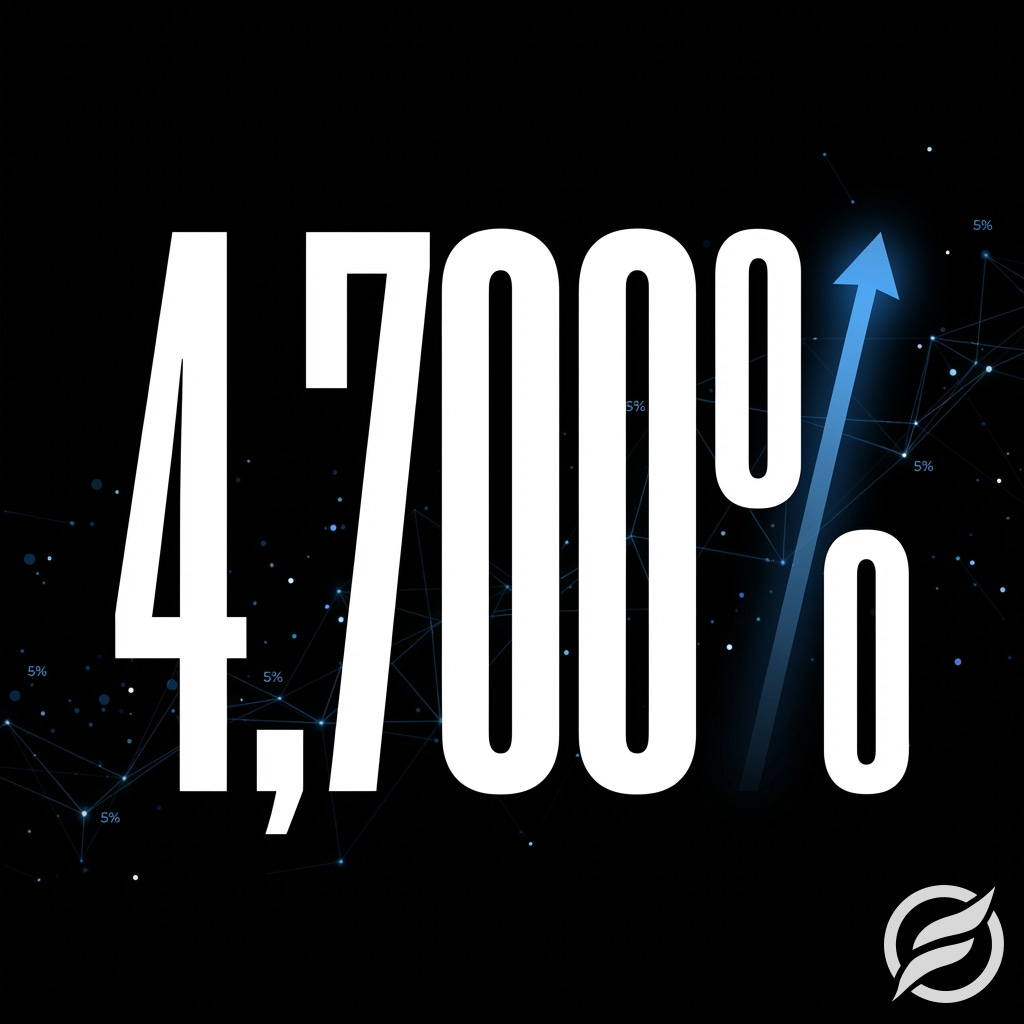
If you need a number to wake you up: 4,700%.
That's the growth in AI-assisted searches between July 2024 and July 2025. One year. Nearly 50x growth.
More context:
• 800 million people now use ChatGPT weekly (doubled from 400M in February 2025)
• 2 billion queries processed by ChatGPT daily
• 25% of people now use AI as their starting point for finding services
• Gartner predicts traditional search volume drops 25% by 2026
This isn't a future prediction. This is happening now.
The clinics that build their "AI presence" today will be the ones patients find tomorrow. The ones that keep throwing money at Google Ads without building content depth will slowly disappear from view.
Not because ads stop working entirely. But because the patient's journey starts somewhere else now—and if you're not there, you're not in the conversation.
Your AI-Ready Content Checklist

So what do you actually do Monday morning?
Here's your 6-point checklist for making your clinic AI-visible:
1. Treatment Philosophy Page
Not "we provide excellent care" but HOW you approach rehab. What's your philosophy? Manual therapy? Exercise-based? Functional movement? Explain it like you're talking to a curious patient.
2. Condition-Specific Content
Shoulder, knee, back, post-surgical—each condition deserves its own detailed page. What's your approach? What results do patients typically see? What makes your treatment different?
3. Patient Stories (with permission)
Real outcomes, real timelines, real experiences. "John came in unable to lift his arm. After 8 weeks of manual therapy and progressive strengthening, he's back to playing tennis." This is the content AI cites.
4. Therapist Expertise Bios
Not just credentials—specialties, training philosophy, treatment approach. "Dr. Sarah Chen specializes in rotator cuff rehabilitation with a manual therapy focus. She's treated 200+ shoulder patients and tracks outcomes using validated assessments."
5. FAQ Content
Answer the questions patients ask ChatGPT:
• "How long does PT take for a shoulder injury?"
• "What's the difference between manual therapy and exercise therapy?"
• "Do I need a referral for physical therapy?"
6. Outcome Data (if you track it)
If you measure outcomes, share them (anonymized). "Average improvement on QuickDASH: 45 points. 87% of patients report return to normal activities within 8 weeks."
The test: Open ChatGPT right now. Search for your specialty + your city. Do you show up? If not, you have content work to do.
The Bigger Picture
This isn't just about marketing. It's about the entire AI transformation hitting healthcare.
The same shift happening in patient acquisition is happening in clinical operations. AI agents that can recommend your clinic to patients can also help you run your practice—documenting visits, checking billing codes, managing schedules.
The clinics that embrace AI-first thinking will win on both ends:
• Acquisition: Patients find you because AI recommends you
• Operations: Your team works efficiently because AI handles the admin
This is the Agentic shift. AI that doesn't just answer questions but takes actions. AI that doesn't just assist but autonomously handles tasks you used to do manually.
The advertising model assumed humans searched, clicked ads, and made decisions. The Agentic model assumes AI synthesizes, recommends, and guides decisions.
One model charges you for clicks. The other rewards you for content.
The Bottom Line
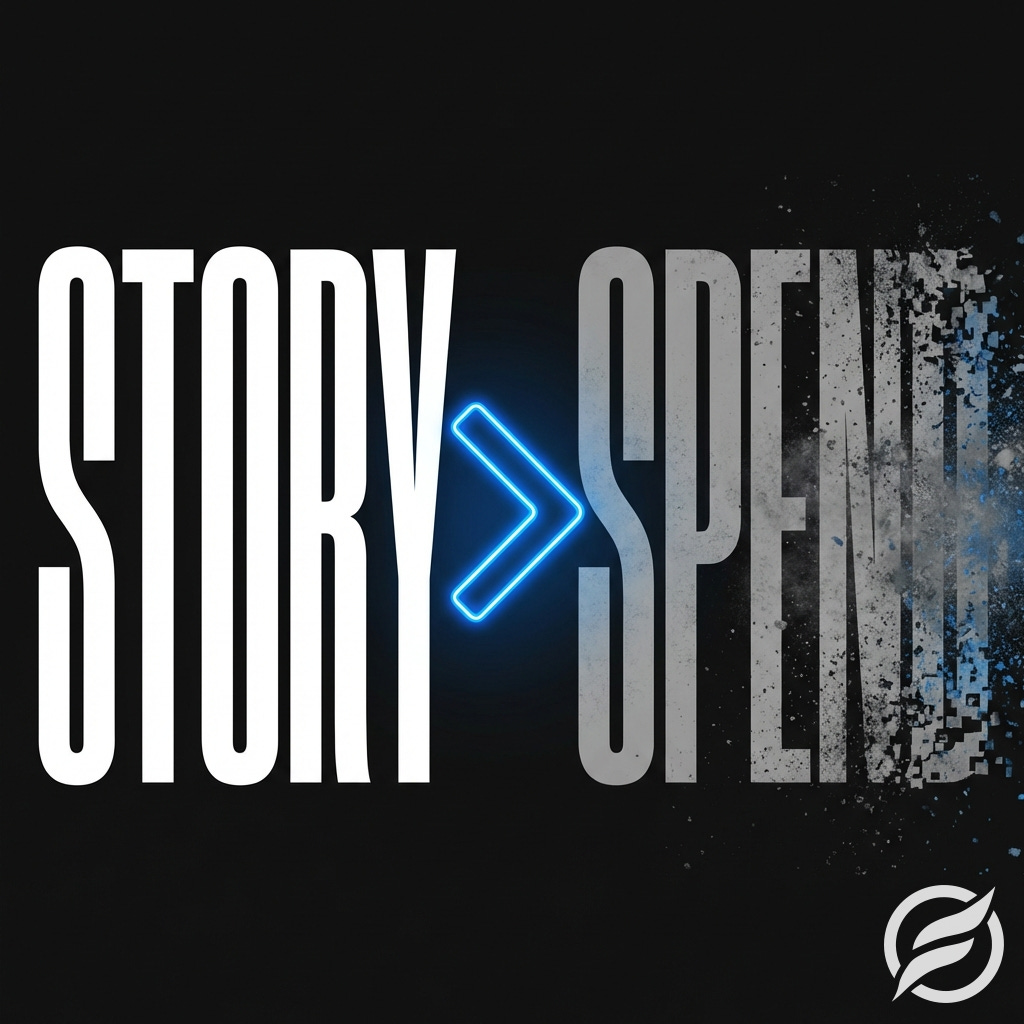
The algorithm doesn't care about your ad budget.
It cares about your story.
The clinics that will thrive in 2026 and beyond aren't the ones with the biggest marketing budgets. They're the ones with the clearest, most comprehensive, most trustworthy content.
41% trust AI over ads. 4,700% growth in AI searches. 800 million weekly ChatGPT users.
The numbers are clear. The shift is happening.
Time to start telling your story.
This piece really made me think. What if AI’s content-first aproach extends beyond health, creating a true meritocracy for all local businesses? It’s a fascinating paradigm shift.